
Numbers Don’t Add Up: Edgewater Police and Flock Tag Searches
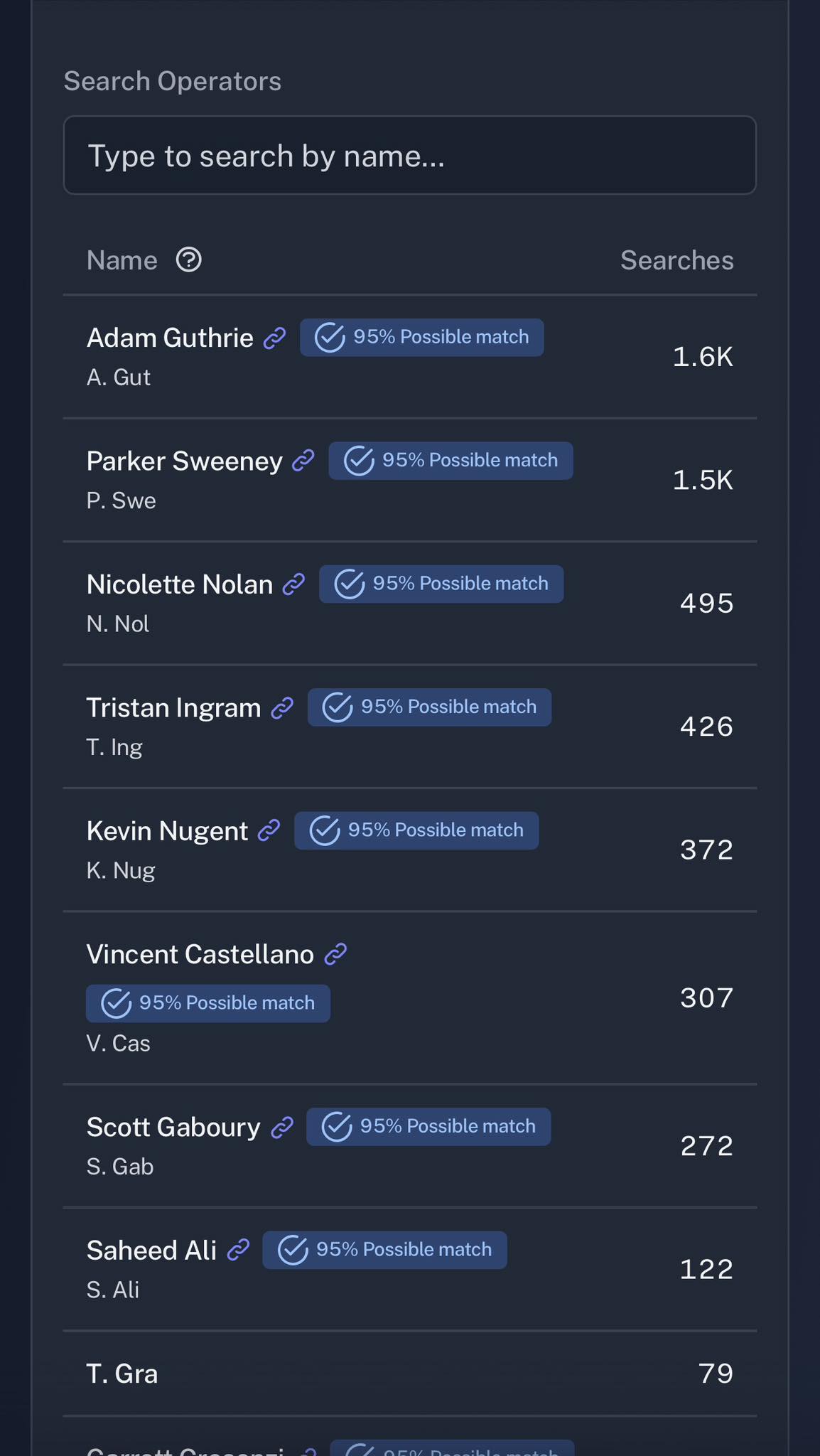
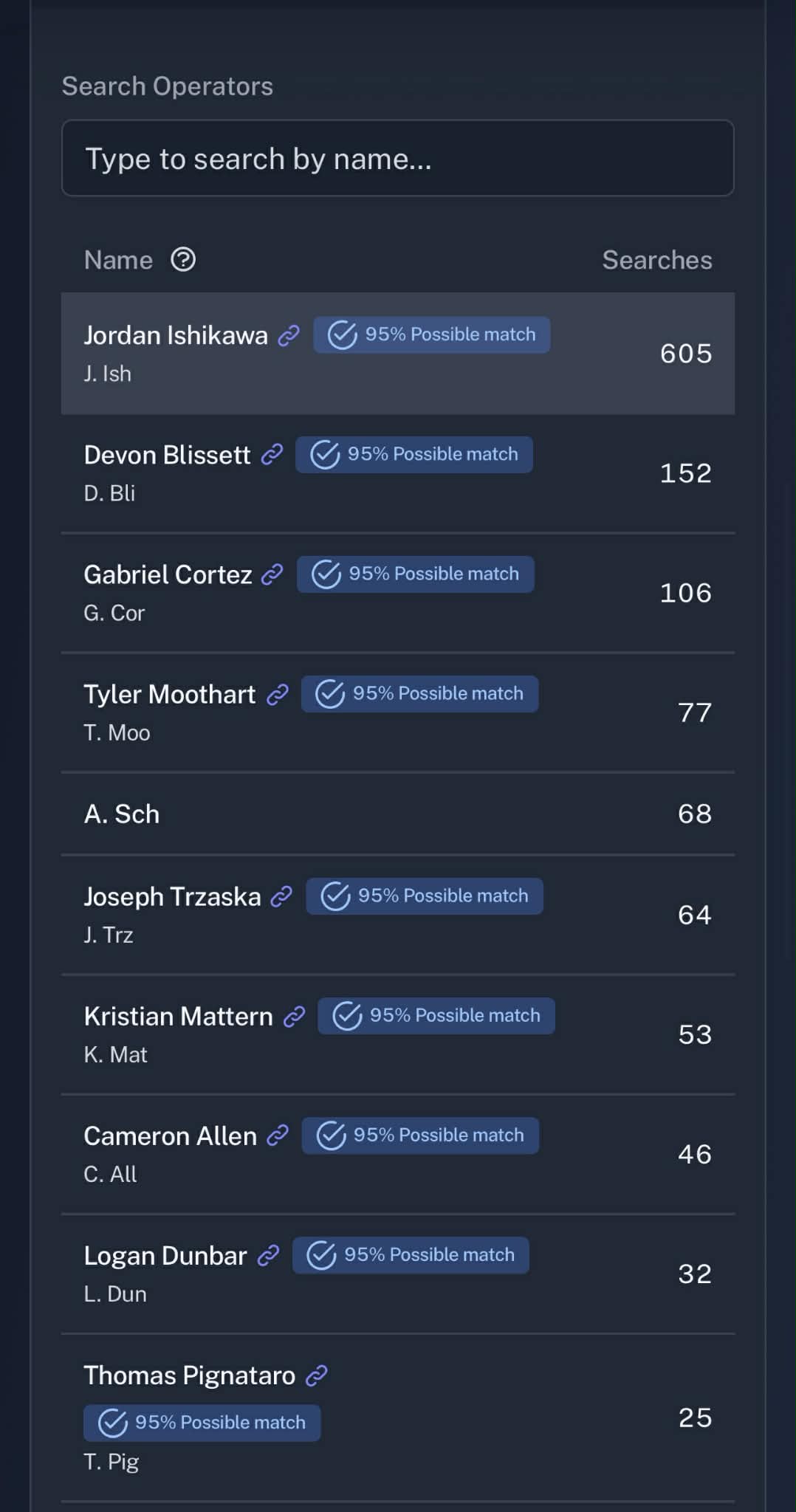
The screenshot below shows something that should immediately raise eyebrows.
This is not rumor. It’s not speculation. It’s usage data from Edgewater Police Department’s Flock Safety license-plate reader (LPR) system, broken down by operator.
Most officers appear to average roughly 300–400 searches per year. That’s consistent across the list and aligns with what you would expect for routine patrol work, investigations, BOLOs, and legitimate law-enforcement purposes.
But two names stand out — dramatically.
One officer logged over 1,500 searches.
Another logged over 1,600 searches.
That’s four times the activity of their peers.
When nearly everyone clusters around the same range and two individuals blow past it, that isn’t “normal variance.” That’s an outlier problem — and outliers demand explanation.
What Flock Is — and What It Isn’t
Flock Safety is marketed as a crime-fighting tool. It captures license plates, timestamps, locations, vehicle characteristics, and movement patterns. When used correctly, it can help locate stolen vehicles, identify suspects, or corroborate timelines.
What it is not supposed to be is:
-
A curiosity tool
-
A surveillance toy
-
A way to monitor individuals without cause
-
A personal tracking system
Every search is supposed to have a legitimate law-enforcement purpose, and every agency is expected to enforce internal controls, audits, and discipline when misuse occurs.
That’s the theory.
The data suggests something else may be happening in Edgewater.
The Disparity Problem
If one officer conducts 350 searches a year and another conducts 1,500+, the question isn’t “Are they working harder?”
The real questions are:
-
Why are their peers able to do their jobs with one-quarter the searches?
-
What criteria justified this volume?
-
Were these searches tied to active cases?
-
Were any searches related to individuals not under investigation?
-
Were audit logs reviewed — or simply ignored?
When two officers account for a disproportionate share of surveillance activity, the burden shifts to the agency to explain why.
Silence is not an answer.