
Daytona Chief Ignores Lying Cops
James Madison Audits Staff | January 13, 2026 A lot of people focus on what happens on camera, but the bigger question is what happens afterward inside the department. That is where Internal Affairs decisions are made, where reporting forms are completed, and where leadership decides what gets sent to outside agencies and prosecutors. When that process fails, the public can lose trust and criminal cases can be affected.
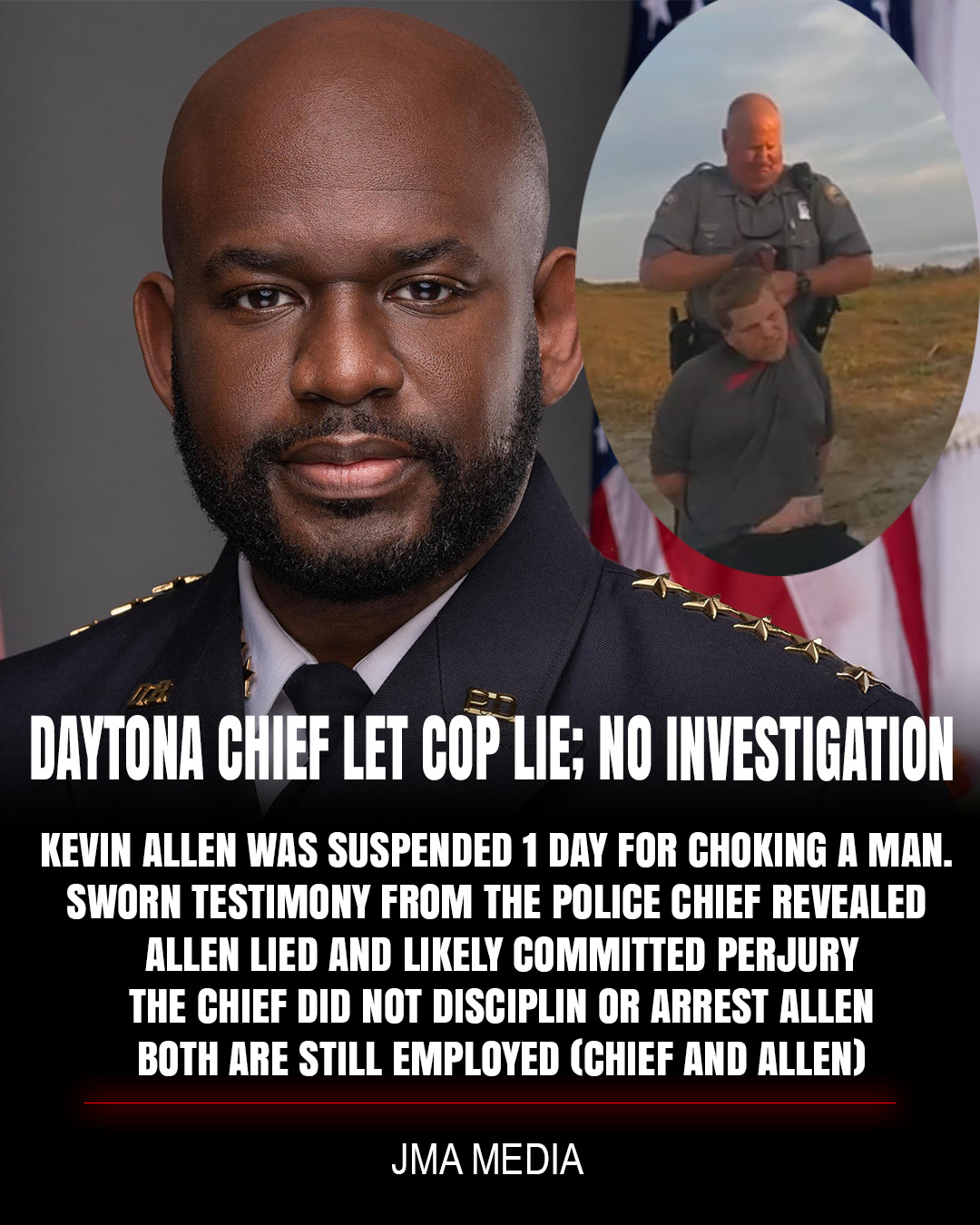
We are using DBPD Officer Kevin Allen as a public example because the public can compare multiple encounters involving the same officer, and because DBPD’s own records show sustained findings in a force-related complaint. We are not asking readers to agree with our opinions about the videos. We are asking readers to look at the pattern and then ask the basic accountability question: does the system correct problems, or does it allow the same issues to repeat? Here are the comparator videos for reference so readers can judge the encounters for themselves: https://youtu.be/JuBdBkdTXzM and https://youtu.be/LL6qRsq7nB8 DBPD’s own internal investigation is IA2022-001. In that Professional Standards case, the department reviewed a citizen complaint involving force and injury allegations. The internal report states that the Axon video depicts Officer Allen intentionally taking the complainant to the ground while the complainant showed no resistance (DBPD IA2022-001, p. 11). The report also describes a shirt-grab at the neckline that tightened around the front of the neck and references a visible red mark injury (DBPD IA2022-001, p. 12). The report reflects sustained concerns about missing documentation and missing photos after the force event (DBPD IA2022-001, pp. 12-13). The main point is that DBPD’s own system treated these issues as sustained findings, which makes proper classification, reporting, and disclosure especially important.
In a City of Daytona Beach arbitration transcript, testimony and questioning focus on how moral character reporting is supposed to work and what happens when a key box is not checked on the CJSTC-78 (Form 78). The transcript includes a direct exchange confirming the sustained excessive force finding, confirming that excessive force is a moral character violation under the rule being discussed, and then acknowledging the moral character box should have been checked. “And he was sustained for a use of force violation, excessive use of force, correct? … Correct. … excessive use of force is a moral character violation, correct? … Correct. … So why wasn’t it checked as a moral character violation? … It appears it should have been.” (Arbitration Transcript, PDF p. 440, lines 13-22) “Okay. So likely … because the box was checked for it not to be sent instead of the correct box that makes it sent, it probably wasn’t sent, correct? … Correct.” (Arbitration Transcript, PDF p. 442, lines 27-33) “If the allegations are sustained … the employing agency shall forward the commission staff the completed investigative package … no later than 45 days after the allegations are sustained.” (Arbitration Transcript, PDF p. 446, lines 2-7) “Would you agree that the FDLE Form 78 for Officer Allen contains a false statement by an omission of not having that checked so it doesn’t get forwarded to FDLE? … I will agree it should have been checked, yes.” (Arbitration Transcript, PDF p. 449, lines 19-26)
The same arbitration transcript also contains testimony about credibility issues and whether potential criminal allegations were forwarded to the State Attorney’s Office. This is where Brady and Giglio concerns become real for the public, because credibility issues are exactly the kind of information that can become impeachment material in criminal cases. “And upon review of the IA investigation where Officer Allen, under oath in an official proceeding, was untruthful, was that forwarded to the State Attorney’s Office? … No, it was not. … Is there a potential crime there? … Yes. … And that’s perjury, correct? … Correct.” (Arbitration Transcript, PDF p. 454, lines 10-20) “So … perjury in an official proceeding could potentially have been sustained, correct? … Potentially. … And so why wasn’t that forwarded to the State Attorney’s Office? … I can’t answer that. … You’re the one that makes that decision, correct? … Yes.” (Arbitration Transcript, PDF p. 455, lines 5-17) “And has it been forwarded to the State Attorney’s Office since then? … No, it has not. … And you clearly know about it now, correct? … Yes.” (Arbitration Transcript, PDF p. 458, lines 10-20) Florida lawmakers added a specific pipeline to reduce these kinds of disclosure failures. Florida Statute 112.536 (effective 2023) says a prosecutor is not required to keep a Brady list, but it also places a duty on the employing agency to forward certain sustained and finalized internal affairs complaints that are relevant to impeachment to the prosecuting agency. The public takeaway is simple: credibility information can sit inside police files, and the system can fail if that information is not transmitted to prosecutors who must comply with Brady and Giglio.
James Madison Audits has also received an anonymous tip alleging that Officer Kevin Allen benefited from an “excessive comp time” practice. At this stage, we have not independently verified that allegation and have only received this information anonymously. We will request the underlying audit materials and any records that identify who approved, benefited from, or was disciplined for comp time irregularities if substantiated, and we will update the report once confirmed. However, his salary according to Gov Salaries was 114,013 according to the site and indicated that since 2020 his pay has increased 38.1 percent or $31,479. This is higher than normal as viewed on the website.
This publication will be asking the City of Daytona Beach and the State Attorney’s Office whether the conduct shown and the reporting and referral handling reflected in the record is acceptable, and if not, who is responsible for fixing it. We will be requesting proof-of-forwarding records for any qualifying sustained and finalized internal affairs matters under the 112.536 pipeline, including dates, recipients, and what was transmitted.
We will also request any available transmission and receipt records tied to CJSTC/FDLE-related submissions when moral character reporting is implicated, consistent with the testimony discussed above. We will request city-levelaudit records and corrective actions tied to any comp time findings if those are substantiated. For Daytona Beach residents and the many visitors who come here, the biggest questions are simple: is this acceptable conduct, and who do we hold accountable when the system allows it. If one sustained matter gets minimized, misclassified, or not routed correctly, the public has to ask how often it has happened, how many cases relied on officers whose credibility issues were not properly disclosed, and how many defendants pled or went to trial without knowing what existed. If the chief is the decision-maker and the pipeline is not followed, then the integrity of the entire agency is called into question, not just one incident. This is not legal advice, but anyone charged or convicted in a case where DBPD officers were key witnesses may want to ask a defense attorney whether any Brady or Giglio impeachment disclosures existed or should have existed, especially if there were sustained and finalized Internal Affairs findings relevant to credibility. We are publishing this because the public has a right to know whether the systems meant to protect fairness, accountability, and constitutional rights are being followed, and because repeated high-conflict encounters mean it is reasonable to ask whether the department’s accountability process is working or failing.